Written by KJ Dahlaw
As part of the Dyke HERstory Dance Tour, we begin this project with our community engagement series, DYKON Story Hour. We are bringing in pairs of Bay Area Dyke Icons to share stories and engage in conversation around Dyke Identity. We are framing the conversations around these questions.
- What does Dyke identity mean to you?
- How has the meaning of Dyke changed through time?
- What are some favorite memories of Dyke community you have?
- Favorite stories of Bay Area Dyke Herstory?
- Who are the Dyke ancestors or elders that have deeply impacted your life and why?
- What is our Dyke legacy?
How has the meaning of Dyke changed through time?
dyke(n.)
“a lesbian,” especially one considered tough, mannish, or aggressive, 1931, American English, perhaps a shortening of morphadike, a dialectal garbling of hermaphrodite; but bulldyker “one who engages in lesbian activities” is attested from 1906. See: bull-dyke.
I was born in 198. I identify as a Millennial, though I am on the cusp. And, I didn’t come out until I was in my 30’s, so my lived-body experience of Dyke identity is limited.
I am, however, a reader of queer theory, feminist theory and movement her(his)(thems)story… What I understand from my studies is that Dyke has been used as a slur throughout the 20th Century. It has been used as a tool of marginalization, defamation and violence against women loving women and perhaps especially against masculine lesbians.
I have experienced being called a dyke by angry men attempting to threaten my safety, even before coming out.
Mostly, my experience of the word Dyke has been with the usage inside lesbian and queer community with pride and a sense of belonging. The word began to be reclaimed in the 80’s and 90’s within the lesbian community as an act of defiance and taking power back from those who wish to destroy the lives of women of lesbian experience.
The meaning of the word Dyke has perhaps always intonated the transgression of women who love women. To a patriarchal, misogynist culture the embrace of women loving women is a threat to systems of power.
Well, three cheers to that!
I maintain my position that I wrote about in my first Dyke blog that Dyke, as opposed to lesbian, is an intersectional, political identity of liberation.
May Dyke always be a threat to structural misalignment of power!
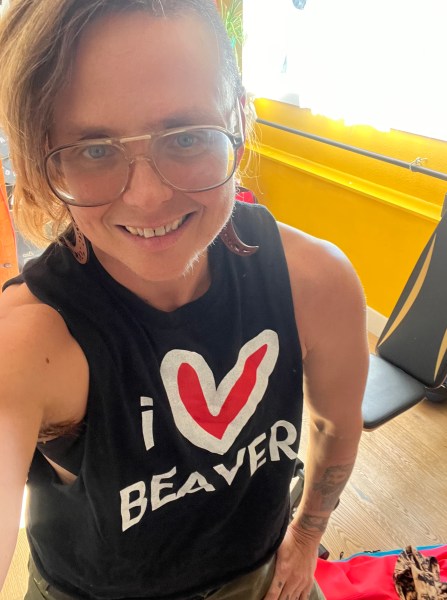
If you’d like to learn more about The Dyke HERstory Dance Tour and how to get involved, visit sarahbushdance.org/the-dyke-herstory-dance-tour/.

